Showing posts with label REITs. Show all posts

Wednesday, 19 April 2017

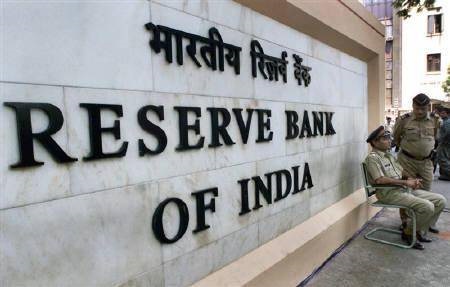
RBI allows banks to invest up to 10% of REITs', InvITs' capital

MUMBAI: In a move to boost spending on infrastructure, the RBI on Tuesday allowed banks to invest up to 10 per cent of the unit capital of single Real Estate Investment Trusts (REITs) and Infrastructure Investment Trusts (InvITs).

"It has been decided to allow banks to participate in REITs and InvITs within the overall ceiling of 20 per cent of their net worth permitted for direct investments in shares, convertible bonds/debentures, units of equity-oriented mutual funds and exposures to venture capital funds (VCFs)," a Reserve Bank of India notification said.

The apex bank said the permission was subject to the condition that banks will not invest more than 10 per cent of the unit capital of a REIT or an InvIT.

"Banks should put in place a Board approved policy on exposures to REITs/ InvITs which lays down an internal limit on such investments within the overall exposure limits in respect of the real estate sector and infrastructure sector," the notification said.

Banks will also have to ensure adherence to the prudential guidelines on equity investments, classification and valuation of investment portfolio, Basel III Capital requirements for commercial real estate exposures and large exposure framework, it added.

In its first bi-monthly monetary policy review of the fiscal presented on April 6, the RBI had permitted banks to invest in REITs and InvITs in a measure designed to revive stalled infrastructure projects.

Source: https://goo.gl/1ULpd2

Tuesday, 11 April 2017

Real estate sector gets 19 investments worth $3.4 billion in first quarter


MUMBAI: Indian real estate is now becoming way more attractive to investors — both foreign and domestic — than ever before, thanks to changes in regulatory framework. The global capital flow into Indian real estate in 2016 stood at about $5.7 billion. Though the historic high of 2007, in terms of total PE inflows, was not breached, last year proved to be the second best year so far.

This year has also started with a bang as real estate companies and projects attracted 19 investments totaling an announced value of $3.41 billion in the first quarter ended March. The value of investments in the March quarter was up 2.7 times from the year-ago period, which had seen investments worth $1.25 billion across 18 transactions, showed data from Venture Intelligence.

“Indian real estate has attracted around $32 billion in private equity so far since 2005…Despite Brexit and uncertainty around the new US president’s outsourcing and visa-related policies, private equity activity looks healthy in 2017 too, thanks to a strengthening and modernizing economy and the growing reputation of India as an attractive investment destination,” said Ramesh Nair, CEO and Country Head, JLL India.

The commercial segment, led by GIC’s $2.14 million investment in DLF’s rental arm, attracted an all-time high investment worth $2.6 billion across five transactions during the March quarter. Venture Intelligence data assumes the proposed transaction between DLF and GIC, which has been disclosed to the stock exchanges, goes through.

“While the mega deal between GIC and DLF's promoters does skew the numbers in a big way during the first quarter of 2017, the spike in investor interest in the commercial segment is for real, given the enhanced activity of other investors like Blackstone and others as well,” said Arun Natarajan, founder of Venture Intelligence.

Global capital flows into Indian real estate are set to increase further. Rise in consolidation activity apart from transparency and possible listings of Real Estate Investment Trusts (REITs) in 2017 are some of the important developments expected to boost foreign and domestic investor participation.


While the commercial segment, with 76%, dominated the investments value pie, the residential projects continued to attract most number of investments attracting 12 investments in the first quarter. Residential projects attracted 63% of the volume pie worth $690 million, Venture Intelligence said.

The western region, dominated by Mumbai, attracted eight investments during the quarter, while projects in north India accounted for six deals, followed by south India with five deals.

The largest investment reported during the quarter was the GIC pact to acquire 40% stake in DLF’s rental arm DLF Cyber City Developers. The next largest deal was Blackstone Group’s $250 million investment to buy 15% stake in the office holding company of K Raheja Corp.

During the quarter, private equity real estate (PERE) investors obtained exits from five real estate investments fetching $119 million. The exit volume was down 62% compared to the same period last year that had witnessed 13 exit transactions worth $390 million.

India’s tier-I cities have moved up to the 36th rank in JLL’s 2016 Global Real Estate Transparency Index — a bi-annual index — on the back of improvements in structural reforms and a more liberal foreign direct investment (FDI) regime. Increase in transparency results in higher investment in such real estate markets.

Source: https://goo.gl/l4477i

Saturday, 27 August 2016

REITS can have great investment potential

Though India is yet to see the launch of its first REIT, introducing this investment vehicle can create a vibrant market for commercial real estate.

Rajeev, aged 40 years, has a well settled job and a stable investment portfolio comprising equity shares and mutual funds. Apart from his routine investments, he has been able to accumulate an amount of 15lakh to 20 lakh which he wants to invest in a long-term asset. He has lately been reading about demand from multinational corporations (MNCs) for leasing commercial office space and complexes. He wants to invest the money in commercial office space so as to reap benefits of the increased demand of leasing commercial space from MNCs.


However, a standalone budget of 15 lakh to 20 lakh is insufficient to buy such an asset so Rajeev has no other option but to continue to put these funds in his existing portfolio of equity shares and mutual funds.

Many individuals like Rajeev are facing a similar dilemma. To help them, securities market regulator, Securities and Exchange Board of India (SEBI)has come up with an investment vehicle called Real Estate Investment Trusts (REIT)

What are REITs?

SEBI notified the REIT regulations in September 2014. REITs are trust vehicles which can raise funds from investors, acquire rent-yielding real estate, manage such real estate and distribute all of the income to investors. The concept of REITs was first introduced in the 1960s in the United States and then in other developed countries like Singapore, Japan and Canada.

REITs are functionally similar to mutual funds - they pool in the investments of many individuals and institutions and then put in this money in real estate assets. Thus, REITs as an investment class provide the common man an opportunity to invest in fixed income securities which also provide long-term capital appreciation and a natural inflation hedge. It also opens to small investors an arena, (rent-generating real estate assets) hitherto the monopoly of large investors.

As compared to a conventional investment in a real estate asset, investing in a REIT provides an investor much needed transparency and hassle-free access to a portfolio of assets, thereby ensuring that an individual does not become a victim of foul play by some developers. Some of the key regulations imposed by SEBI which make REIT well-regulated and investment-friendly are: Compulsory distribution of 90% of net distributable income earned by REIT to its investors; Specific norms in respect of portfolio of assets which can be held by a REIT; such as at least 80% of the value of REIT to be invested in completed and rent-generating properties Full and transparent disclosure of transactions with related parties Norms in respect of appointment and independence of valuer have also been put in place Audit of accounts of REIT to be done for not less than two times a year Well laid set of rights and responsibilities of unit holders, investment manager, trustee and valuer, etc.

Benefits of REIT:

Although India is yet to see the launch of its first REIT,the introduction of REIT is expected to create a vibrant market for commercial real estate in India. REIT has the potential of offering a perfect investment opportunity to small investors. It has democratized real estate investment by giving all investors the ability to invest in the real estate sector and gain the same benefits. We have listed below some of the benefits offered by REITs: Indian tax laws provide for beneficial tax regime for REITs and its investors, in line with the global standards; Ensure regular inflow of income with capital preservation and appreciation; Offer a natural hedge against inflation as commercial real estate rents and values have a tendency to increase when prices increase.

This has supported REIT dividend growth, providing retirement investors with reliable income even during inflationary periods; Offer easy exit opportunity and liquidity to investors; Provide developers with an alternate source of raising funds from public; Convenient way to invest in real estate assets instead of the conventional way which involves the tedious task of undertaking proper due diligence, completing property related regulatory formalities, etc. Assist in streamlining the real estate sector by removing investment gaps.

Investment Tips:

In spite of the fact that Indian markets have not seen practical application of the concept of REIT, still theoretically, investment in REITs is quite an easy and transparent process. SEBI regulations require units of REITs to be listed on a recognized stock exchange allowing easy trading of REIT’s units.
An individual can easily acquire the units of REIT from the stock exchange. SEBI regulations also provide that minimum subscription by each investor shall be merely 2 lakh with a minimum trading lot of 1 lakh.

Estimating any range of return from a REIT at this stage may sound like an early shot from the gun, however, it would be interesting to see if REITs as a vehicle are able to perform in the Indian real estate market and provide good post tax returns to its investors. The author is a partner and national leader - real estate practice, EY Abhishek Arora, senior tax professional, EY also contributed to the article.

Source: PropertyatNeoDevelopers.Wordpress.Com

Tuesday, 6 October 2015

REITs to start functioning shortly: Finance Ministry

Finance Ministry today said it expects newly-created business structures REITs to start functioning shortly, a move which will give a boost to the realty sector.

"As regards investment in housing sector, the REITs structure we positioned in this year's Budget... I would expect some of the REITs to start functioning very shortly," Economic Affair Secretary Shaktikanta Das said.

In order to provide fillip to investments in realty sector, Finance Minister Arun Jaitley had in Budget rationalized capital gain tax regime for the sponsors of Real Estate Investment Trusts (REITs).

REITs, an investment avenue on the lines of one in developed markets like the US, the UK, Japan, Hong Kong and Singapore, can be listed and trading would be allowed in units of REITs like any other security on stock exchanges.

Asked if banks need to lower interest rates to boost housing sector, Das said interest rate is a decision of individual banks. "There has been an increase in the FII, FPI limits for GSecs. I am sure banks will see the overall situation and take a call (on interest rates)".

Following 0.50 per cent cut in rates by RBI last month, State Bank of India has effected maximum reduction in base rate (0.40 per cent), while some banks are yet to cut.

As regards subsidy expenditure, Finance Secretary Ratan Watal said the government is looking at implementing the direct benefit transfer scheme in kerosene and food.

He further said the government is looking at interest subvention scheme and may provide subsidies as capital support to sectors like textile, which are facing problems.

"Overall, expenditure on major subsidies as a percentage of GDP has come down from 2.5 per cent of GDP in 2012-13 to 1.6 per cent of GDP in 2015-16," a Finance Ministry statement said.

Source: PropertyatNeoDevelopers.Wordpress.Com

Saturday, 2 May 2015

REITs unlikely to charm retail investors

Real estate developers like Neo, DLF, Parsvnath and Omaxe have finally got a favourable tax regime on Real Estate Investment Trusts (Reits), but analysts feel only institutional investors with deep pockets and patience rather than retail investors will queue up for the asset class due to a slump in the real estate market.

Developers usually form individual companies or special purpose vehicles (SPVs) to execute specific real estate projects. For a Reit with diversified real estate assets which could be listed, developers need to exchange shares of several such companies with the units of the newly formed Reit at a price that reflects the market price of these assets. Finance minister Arun Jaitley on Thursday had exempted Minimum Alternate Tax (MAT) on the developer at this stage. Tax on capital gain arising from such swap was exempt even earlier.

Experts say the government finally has appreciated the fact that the potential liability of MAT at this stage was blocking the commercial viability of Reits. They said the exemption will push sponsors to take next steps of setting up a Reit.

Hemal Mehta, senior director, Deloitte in India, said investor interest in Reits would depend on the actual returns offered by them compared with other investment avenues. “Globally, Reits offer a pre-tax return of about 8-10% and it is likely that foreign institutions may show more appetite for Reits in the initial years rather than retail investors considering the current market conditions,” he said.

The push that the Modi governments is planning to give to the urban development and smart cities is likely to give a boost to the real estate sector, which is mainly driven at present by investors rather than consumers. Home sales have slowed down in the recent years in metros due to a surplus inventory, while developers were confronted with huge debt burden. Reits, if takes off well, would provide a new source of capital to the developers, while giving investors the opportunity to participate in the sector without actually buying homes or commercial properties. Analysts also welcomed the exemption of gains arising on sale of units of Reit on stock exchange from MAT.

Ajit Krishnan, tax partner with EY India, said Reit is likely to be successful in the country since it provides a new source of funding to the real estate sector, which currently has a debt-overhang. “Traditional sources of funding are now minimal in the real estate sector. With sales being tepid, funds that were earlier available from banks and private equity sectors have also reduced substantially. In such a case, Reit will provide the sector a new funding source,” said Krishnan.

A few procedural changes are also essential to make Reits a success. These include changes in the Foreign Exchange Management Act (Fema) rules to provide for automatic approval of FDI in Reits. Full foreign direct ownership is allowed in real estate, subject to certain riders.

The finance Bill approved by Lok Sabha extended MAT exemption not only to foreign portfolio investors (FPIs) but also to foreign companies, PE funds, debt funds and venture capitalists who earn interest, royalty and fee for technical services which is currently taxed below the MAT rate of 18.5%. Capital gains earned in India by these foreign entities are also exempt from MAT prospectively.

Sameer Gupta, Tax Leader for Financial Services, EY India, said a major demand of debt FPIs was the exclusion of interest income from MAT liability. The concessional rate of 5% introduced two years ago would have become redundant if MAT was to apply. “Now, the finance minister has provided relief and that is a welcome step,” said Gupta.

Jaitley also extended the tax breaks available to units in backward areas of Andhra Pradesh or Telangana set up after April 1 to those in Bihar and West Bengal, too. Both states would enjoy the additional depreciation at the rate of 35% instead of 20% in respect of actual cost of new machinery or plant (other than ship and aircraft) acquired and installed on or after 1 April 2015 but before 1 April 2020, said a KPMG note on the amended Bill.

Developers to soon start process for REITs

Real estate developers and foreign INVESTORS, who had recently sent out feelers that their Reits (real estate INVESTMENT trusts) plans were either shelved or were on the backburner, are now back to discussing the finer points of the project after the government has relaxed norms on minimum alternate tax (MAT).

According to experts tracking the sector, MAT was one of the biggest hurdles in the way of Reits and now, many players will take a fresh look at on this.

On Thursday, FINANCE Minister Arun Jaitley said MAT would not be applicable on notional book gains, arising from exchange of shares in SPV (special purpose vehicles) with unit of trusts in infrastructure and real estate (Reits/InvITs).

The country’s largest real estate player, DLF, as well as others, including K Raheja, Supertech, Phoenix Malls and private equity players such as Blackstone, have been planning to launch Reits but were waiting for clarity on taxation issues. Now, the ambitious project is likely to take off, bringing in billions of dollars of INVESTMENT.  

Applicability of capital gains and MAT on exchange of units against shares of SPV at the time of setting up Reits was a roadblock in the launch of these INVESTMENT vehicles.

Ashok Tyagi, chief financial officer, DLF Group said, “This decision removes a major policy hurdle and will give a significant boost to the establishment of these trusts. This, coupled with the recently announced capital gains tax exemption at the hands of the sponsor and other fiscal incentives to investors will make infrastructure and real estate trusts far more viable and attractive.”

“DLF has already announced its intent to pursue Reits and DLF is committed to set up its first Reit within this year, consequent to receipt of all necessary approvals. These trusts provide a huge opportunity for unlocking capital,” he said.

Blackstone did not reply to a questionnaire on the matter.

In the Budget this year, the capital gains aspect had got an exemption for such a transaction, but MAT had continued to apply. “This did not stand to reason because the gain is notional as cash gets generated in the transaction. This amendment is a great relief to Reits as the tax will be levied only when the units of the Reits are sold,” Rahul Jain, partner, Nangia & Co, said.

Jain expects to see the launch of Reits in the country this year itself. However, he said removing dividend distribution tax (DDT) would have helped Reits.

Dividends paid by an SPV holding Reit attract DDT of 15 per cent. Subsequent distribution of income by the Reit in turn will be subject to TDS at the rate of 10 per cent for resident unit holders and five per cent for non-resident unit holders. Further, such income will be taxable in the hands of individual unit holders as well. The aggregate tax effect shall be considerably high, resulting in low yield, which may act as a deterrent to INVESTMENT in Reits.

The government could have done well to keep Reits out of the ambit of DDT, especially when a Reit is required to distribute 90 per cent of its lease rental income to the unit holders, he said.

Reits are similar to mutual funds, which can be listed and traded on stock exchanges. These have to distribute a majority of their income as dividend.

Friday, 13 March 2015

Tax hurdles may delay REITS

It may take much longer for real estate investment trusts (REIT) to launch in India, with top realty firms and private equity (PE) funds finding the current tax structure unviable, despite the sops and incentives introduced in the recent Union budget. Experts say there is a slim chance the FINANCE ministry may introduce an interim tax relief for REITs, but most believe the wait for an efficient tax structure will probably last till next budget.

While the FINANCE minister proposed to rationalize the capital gains regime for sponsors exiting at the time of listing of units of REITs, subject to payment of securities transaction tax, matters such as minimum alternate tax (MAT) and dividend distribution tax (DDT) have not been addressed. “While the overall sentiment of the budget was good, it doesn’t look encouraging as far as REITs are concerned because of the tax inefficiencies,” said Mike Holland, chief executive officer, Embassy Office Parks, the entity under which global private equity fund Blackstone Group Lp and partner Embassy Property Developments Pvt. Ltd have aggregated an office asset portfolio valued at an estimated $2 billion.

The partners were earlier looking at a possible end of 2015 listing of their REIT if the budget had the right kind of tax incentives. Holland said that there are around 34 REIT markets around the world that have a fairly standard tax pass-through structure. REITs are listed entities that primarily invest in leased office and retail ASSETS, allowing developers to raise funds by selling completed buildings to investors and listing them as a trust. REITs will also give foreign investors a chance to invest in lease rental generating assets, an asset class otherwise prohibited for foreign investments. The 2014 budget took the first step in encouraging the trusts by providing a partial pass-through to them.

Senior executives of K Raheja Corp. Ltd and Phoenix Mills Ltd said that in the current form, REITs don’t seem very attractive. Atul Ruia, joint managing director, Phoenix Mills, which has a sizeable portfolio of shopping malls, said REITs don’t look like a completely workable option as of now.

However, this year, the firm is working on its first commercial mortgage-backed securities issue, a process by which it will raise debt against some of its assets. “We have not exempted any particular sector from MAT. There was huge demand even from special economic zones (SEZ) for exemption from MAT. In the case of dividend distribution tax also, which has been demanded for REITS, no particular sector has been exempted,” said a senior FINANCE ministry official, who did not want to be identified. “Once you start the process of exemption, it becomes endless. There are huge revenue implications involved. We get more than Rs.37,000 crore from MAT in a year,” the official said. “On REIT and infrastructure INVESTMENT trust, the pass through is clear; but at the special purpose vehicles (SPV) level, there is some problem. The issues posed to us were about the rental income and the sponsors’ capital gains. Both those issues have been addressed.

The industry has now raised some more concerns. We will look into it,” said a senior official from the income tax department, who did not want to be identified. Another firm working on a REIT listing is Bengaluru-based realty firm RMZ Corp., backed by sovereign wealth fund Qatar INVESTMENT Authority. “Since our scheduled listing is in the first quarter of 2016, we need more tax breaks in the next budget to come, in line with the internationally-listed REITs in other countries. We have no plans till then,” said RMZ’s managing director Raj Menda. DLF Ltd, which has a massive office portfolio, has been seriously looking at a REIT as a way to monetize its ASSETS. Rajeev Talwar, executive director at DLF, said the firm is focused on a REIT listing.

“Along with rate cuts by RBI this year, we are certain to move ahead. Bankers have been appointed for the purpose. In our talks, it has emerged that removing residual ambiguity around MAT will be a nailing factor for establishment of REITs and usher in INVESTMENT by FIIs (foreign institutional investors), and later by retail investors,” said Talwar. “As per provisions, MAT will be applicable on exchange of units against shares of SPV, despite the capital gains exemption given to sponsors of REITS. This despite the fact that though there is a book profit, there is no cash flow,” said Zulfiqar Shivji, global liaison partner and head of transaction advisory services, BDO India LLP. “This will not help big developers much who are starved of cash.”

Friday, 27 February 2015

Realty sector seeks removal of multiple tax levels on REITs

The real estate industry is keenly waiting for clarity on the tax structure applicable to real estate investment trusts, or REITs, from the upcoming Budget. In July, finance minister Arun Jaitley in his Budget speech gave a so-called “pass through” status to REITs. However, the explanatory statement accompanying the 2014-15 Budget revealed that the tax incentive given to REITs comes in with riders.

The pass through treatment is essentially accorded when REITs are acting as a debt-raising instrument. For instance, if a sponsor, or SPV, has formed a REIT to raise funds either in a foreign or domestic market through bonds or loans, the trust will deduct a witholding tax, before repatriating the interest income to investors. So, while the tax is paid by the trust, the tax liability is that of the investor, and not the SPV or the REIT.

“The special tax regime says that no tax is levied on interest income received from the SPV in the hands of the trust and no withholding tax is levied at the level of SPV. Withholding tax is levied on payments of this interest income to unit holders at 5% for non-resident unit holders and at 10% for resident unit holders,” Pranay Bhatia, partner at BDO India, explained.

However, if an SPV is distributing dividend on equity to the trust (which in turn will repatriate to the investor), it will be subject to dividend distribution tax at the SPV level, but exempt in the hands of the trust and the unit holders.

Also, REIT units, when traded on the stock exchanges, would attract a similar tax treatment as equities, and will be liable for securities transaction tax. While REITs will be exempt long-term capital gains tax, they will attract short-term capital gains tax of 15%.

REITs will also attract minimum alternate tax. So, while swap of shares for units in REIT are not taxable in case of promoter, according to accounting practices, the difference between the fair value of REITs and the cost of shares will be credited to the profit and loss account, leading to a MAT levy of 20% under the I-T Act.

However, the REIT itself will only be taxed in case the assets it holds are transferred to another REIT. Capital gains at the time of sale of assets by the business trust will be taxable in the hands of the trust at the applicable rate. If such capital gains are distributed, the component of distributed income attributable to the capital gains would be exempt in the hands of the unit holder.

The realty sector is expecting that the Budget will exclude both DDT and MAT levies on the REIT structure and exempt it from multiple tax levels, bringing in a level-playing field for more investors.